Navigating the High-Stakes Shift: How Private Fleets Are Transforming Driver Safety and Retention Amid Rising Litigation Costs

The modern logistics and transportation landscape is undergoing a fundamental structural evolution, driven by the dual pressures of an enduring qualified driver shortage and skyrocketing accident litigation expenses. For decades, the standard playbook for managing struggling or high-risk commercial drivers relied heavily on a reactive approach: monitor incidents as they occurred, issue disciplinary actions, and, if necessary, terminate the employee and attempt to find a replacement in a notoriously tight labor market. Today, however, industry leaders say that playbook is obsolete. Private fleets are pivoting rapidly toward proactive, data-driven safety ecosystems that emphasize the early identification of risk, continuous professional development, technological integration, and the retention of existing human capital.
This strategic transformation took center stage during a recent industry discussion featuring Hayden Cardiff, vice president of safety solutions at Descartes, and Tim Eckhardt, senior director of safety at Dot Foods Inc. The dialogue illuminated the harsh economic and operational realities facing commercial carriers across North America, where the threat of astronomical jury awards—commonly known as "nuclear verdicts"—has turned risk management into a core component of corporate survival.
The Evolving Economics of Fleet Safety and the Myth of Easy Replacements
At the heart of this operational pivot is a harsh arithmetic: qualified truck drivers are increasingly difficult to recruit, vet, and retain, while the financial exposure tied to highway accidents has never been higher. According to industry analyses, the cost of commercial vehicle litigation has surged dramatically over the past ten years, driven by litigation funding firms, aggressive legal strategies, and shifting public sentiment toward corporate defendants.
Historically, when a commercial driver exhibited persistent safety infractions—such as frequent hard braking, speeding, or lane drifting—fleets frequently relied on termination. The prevailing assumption was that a struggling driver could be easily swapped out for a fresh applicant. In the current economic climate, that assumption no longer holds water.
Hayden Cardiff of Descartes emphasized that driver shortages and surging operational costs have permanently altered how commercial fleets must view driver performance. Carriers can no longer afford to treat drivers as disposable commodities. Instead, the modern imperative is to identify behavioral risks at their earliest stages, implement targeted interventions, and cultivate a culture of retention, training, and genuine engagement.
Transitioning from Reactive Gut-Checking to Predictive Data Analytics
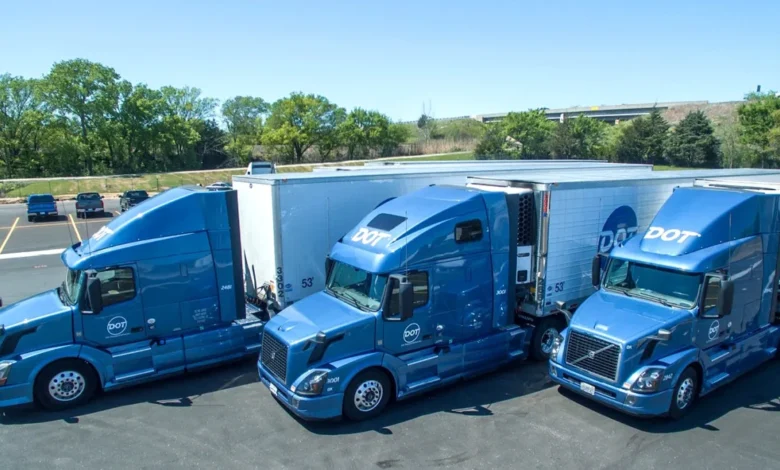
For Dot Foods Inc., North America’s largest food industry redistributor and less-than-truckload consolidator based in Mount Sterling, Illinois, this realization sparked a comprehensive overhaul of its safety infrastructure. Dot Transportation, the proprietary transportation arm of the enterprise, operates a massive fleet of nearly 2,200 trucks and roughly 2,900 multi-temperature trailers spanning the United States and Canada.
Overseeing this expansive operation requires navigating complex matrices of driver safety, regulatory compliance, rigorous training programs, accident response, litigation defense, and enterprise-wide risk management. Tim Eckhardt recalled that the company’s legacy safety framework was largely reactive and administratively cumbersome.
"In the past, you were digging through systems, digging through spreadsheets, digging through everything you could to find the data, and then you ended up basically going off a gut of which drivers were your highest risk or not," Eckhardt explained.
That subjective approach has been entirely replaced by a sophisticated model anchored in telematics, in-cab camera systems, and predictive behavioral analytics. Rather than attempting to manually review and coach every minor alert generated by modern vehicle technology—a trap that frequently leads to administrative burnout and driver alienation—Dot Foods focuses its resources strategically. The company concentrates its direct coaching efforts on roughly the bottom 10% to 20% of its total driver population. Crucially, Eckhardt noted, this cohort is not static; it is fluid, shifting constantly as individual performance metrics improve or deteriorate over time.
Structuring Intervention: The Scorecard and Professional Development Plans
To operationalize this targeted approach, Dot Foods utilizes a granular scoring methodology ranging from zero to 100, where zero represents exemplary driving performance. Under this internal metric system, any driver whose cumulative score exceeds 70 is automatically flagged for intervention. These individuals are required to participate in a formalized professional development plan and undergo heightened monitoring by safety supervisors.
Significantly, the overarching objective of this flagging system is remediation, not immediate termination. Eckhardt shared that as of the week preceding the industry conference, only about 30 individual drivers across the entire Dot fleet maintained scores above the 70-threshold—a dramatic reduction from the days immediately following the program’s inception.
When a driver is placed on a professional development plan, the intervention is multifaceted. It can encompass one-on-one coaching sessions, supplementary behind-the-wheel training, supervised ride-alongs with senior instructors, and the deployment of specialized in-cab technology tailored to address specific behavioral flaws. For example, if telemetry indicates that a specific driver struggles with chronic speeding, the company may utilize electronic governance to cap the vehicle’s maximum speed, effectively engineering a technological barrier against the unsafe behavior.
"It’s not just to build a plan and coach till you turn blue," Eckhardt stated. "Find technology, find other resources you can to help change that behavior and help set them up for success."
Nevertheless, management acknowledges that remedial measures cannot succeed in every single instance. For drivers who demonstrate an inability or unwillingness to alter high-risk habits, Dot Foods maintains a deliberate "exit strategy" designed to separate the individual from the fleet prior to the occurrence of a catastrophic accident.
Timeliness, Personalization, and the Power of Transparent Communication
Effective coaching within the Dot Transportation framework relies heavily on two foundational pillars: speed of feedback and individualization. Eckhardt stressed that addressing risky behavior weeks or months after an incident has occurred drastically diminishes the educational impact. Managers are trained to review data and engage with drivers while the patterns are still fresh.
Furthermore, coaching styles are intentionally adapted to match the tenure and profile of the individual employee. A veteran driver with two decades of loyal service to the company may respond best to a short, direct, and pragmatic conversation about safety expectations. Conversely, a newly minted commercial driver often requires a deeper, more empathetic explanation detailing the physics of a heavy vehicle, the underlying rationale for a specific company policy, or the specific regulatory framework governing the industry.
In line with this philosophy, Dot Foods has significantly increased its internal transparency. The company openly communicates with its driving workforce regarding the true financial costs of highway accidents, the precise reasoning behind newly implemented safety policies, and the operational objectives of cameras and sensors installed inside the cabs.
Balancing Discipline with Recognition and Managing Managerial Ratios
A critical component of Dot’s modern safety culture is the conscious effort to balance corrective discipline with positive reinforcement. Safety managers are instructed to utilize data and camera footage not merely to flag infractions, but to actively identify and celebrate exemplary driving decisions. This dual-purpose utilization of technology helps reframe safety programs from punitive surveillance mechanisms into supportive professional development frameworks.
According to Eckhardt, this approach safeguards the vital interpersonal relationship between drivers and their supervisors. If a manager’s inaugural interaction with a newly hired or veteran driver centers entirely on reprimands or disciplinary write-ups, the professional relationship is frequently damaged beyond repair.
Maintaining healthy relationships, however, requires realistic operational ratios. Eckhardt noted that assigning a single manager to oversee 150 drivers makes individualized, effective coaching nearly impossible. By scaling supervisory assignments down to a ratio of roughly 70 to 80 drivers per manager, Dot ensures that supervisors have the bandwidth required to foster genuine professional relationships.
The Over-the-Road Training Pipeline and Compensation Alignment
The commitment to professional development begins long before a driver is assigned to a standard route. Dot Transportation maintains a robust training pipeline supported by approximately 200 dedicated over-the-road (OTR) driver trainers. The company targets a sustainable ratio of roughly 12 driver trainees per dedicated trainer. Depending on the initial skill level and professional background of the recruit, the structured OTR training period typically spans four, eight, or twelve intensive weeks.
Beyond training and coaching, Dot Foods has directly aligned safety performance with financial compensation. The company’s quarterly driver safety bonus program has expanded significantly, now accounting for nearly 10% of a typical driver’s total annual income. This substantial financial incentive provides a tangible reward for maintaining clean safety metrics, turning adherence to best practices into a lucrative proposition for employees.
Solving the Data Overload and Weighing Future Technologies
While modern telematics and in-cab cameras have revolutionized fleet monitoring, they have simultaneously introduced a new operational hurdle: information overload. Hayden Cardiff of Descartes pointed out that modern commercial trucks and enterprise back-office software generate such a vast ocean of telemetry data that safety departments frequently struggle to separate critical insights from background noise. The primary challenge for modern fleets lies in filtering this data stream to identify precisely which signals warrant immediate human intervention.
As Dot Foods continually evaluates its technological roadmap, leadership carefully weighs the return on investment (ROI) for every safety expenditure. Eckhardt offered a straightforward financial calculation: investing $250,000 into a comprehensive suite of safety technology easily justifies its capital expense if it successfully prevents even a single major accident of comparable financial magnitude.
Looking toward the horizon, Dot Foods continues to evaluate emerging innovations, including advanced technologies designed to curb driver cellphone usage behind the wheel. However, the company proceeds with caution, balancing safety ambitions against practical and legal considerations. Dot currently permits its over-the-road drivers to use hands-free communication devices, recognizing that drivers spending weeks away from home require reliable avenues to maintain contact with their families and support systems.
Conclusion: Transparency as the Ultimate Safety Catalyst
Reflecting on the evolution of Dot Foods’ comprehensive safety architecture, Eckhardt concluded that the most transformative element of their success is not necessarily any specific piece of hardware or software, but rather a culture of radical transparency. By demystifying the corporate rationale behind safety policies, in-cab technology, and operational data sharing, the company has successfully transformed its workforce from passive participants into active stakeholders in enterprise safety.
"One of the biggest things we have done is just transparency and open books and share the why behind everything out there," Eckhardt emphasized.
As accident litigation costs continue to mount and the nationwide pool of qualified commercial drivers remains constrained, the strategic pivot demonstrated by private fleets like Dot Foods offers a clear blueprint for the future of the logistics industry: replacing reactionary discipline with proactive development, data-driven insight, and mutual trust.